
Seeing no water in a Karl Fischer test doesn’t prove your sample is completely dry because water can exist at molecular levels or be below detection limits. Visual inspection isn’t reliable, and even a “no water seen” result doesn’t account for trace moisture or tightly bound water. Several factors like sample prep and interference can affect accuracy. To fully understand what these results mean, keep exploring how detection limits and test conditions influence moisture measurements.

Get garage and car supplies delivered free — and shop member deals
- Fast, free delivery on millions of items
- Access to Prime Big Deal Days deals on October 6–7
- Prime Video, Amazon Music and more included
Key Takeaways
- “No water seen” only indicates moisture below visual detection, not complete dryness or absence of all water.
- Karl Fischer testing measures molecular water, which may still be present even if unseen visually.
- Detection limits define the minimum moisture level measurable, so results near this limit require careful interpretation.
- Interferences or improper sample handling can lead to false negatives, making “no water seen” unreliable.
- Moisture can be tightly bound or hidden within the sample, remaining undetectable visually but still present.
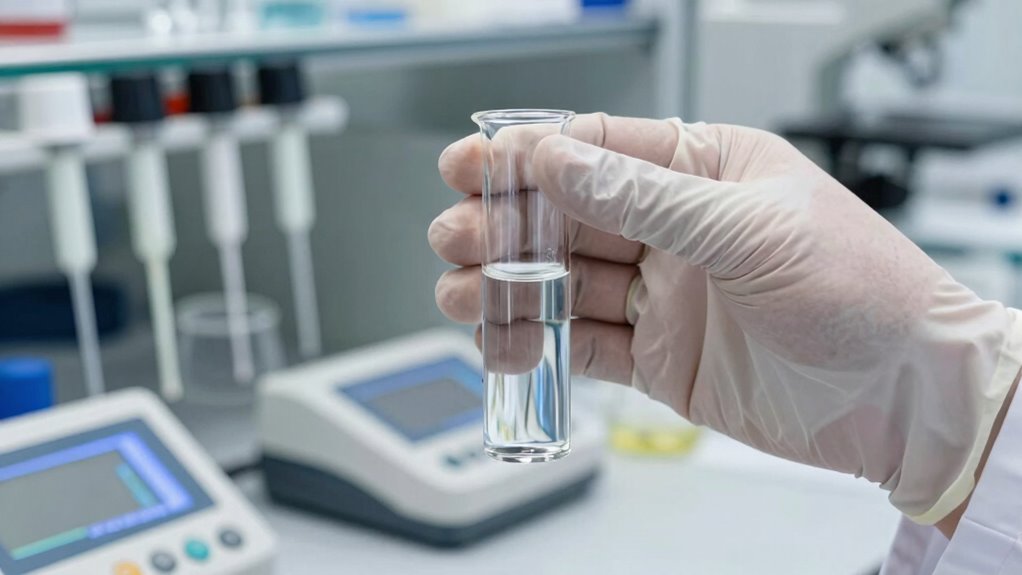
Karl Fischer water testing is a precise method used to measure the moisture content in various substances. When you perform this test, you’re directly evaluating the amount of water present, which makes it an essential tool for accurate hydration measurement and moisture analysis. Unlike visual inspection or rough estimations, Karl Fischer titration provides quantitative data, guaranteeing you know exactly how much water exists in your sample. This accuracy helps prevent errors that could compromise product quality or process efficiency.
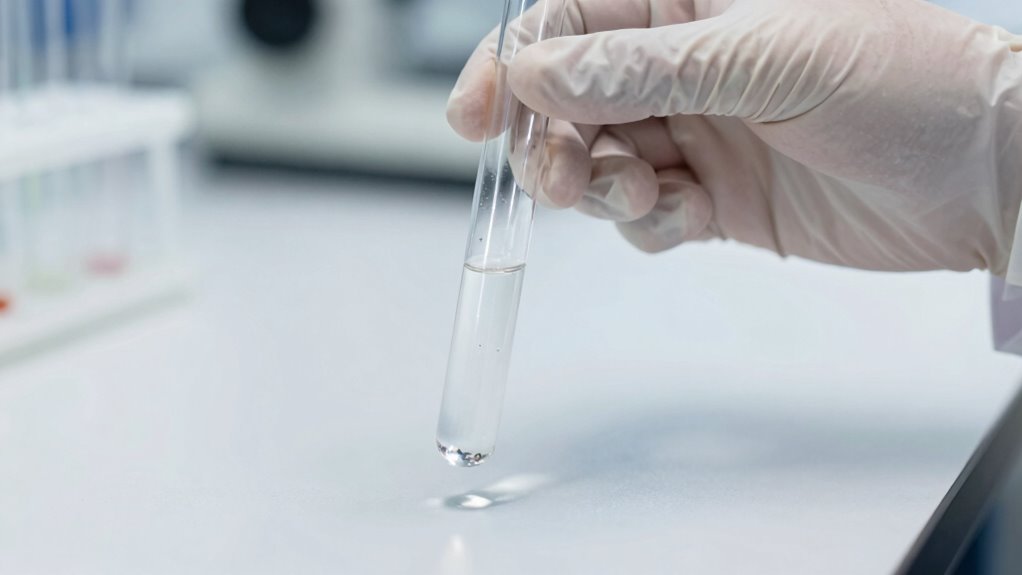
Many people assume that if the Karl Fischer test indicates “no water seen,” the sample is completely dry. However, this isn’t necessarily true. The phrase “no water seen” often comes from visual cues or the absence of visible moisture, but it’s critical to understand that the test measures water at the molecular level. When the titration shows no detectable water, it simply means the moisture level is below the method’s detection limit. It doesn’t guarantee absolute dryness. Subtle amounts of water can still be present, especially in complex matrices or tightly bound within the sample’s structure. This highlights why relying solely on visual cues or assumptions can be misleading in moisture analysis.
“No water seen” doesn’t mean the sample is completely dry; trace moisture may still be present at the molecular level.
You should also recognize that Karl Fischer testing is sensitive to many factors, including sample preparation, temperature, and the presence of interfering substances. These variables can affect the accuracy of the hydration measurement. For instance, if your sample contains chemicals that react with the titration reagents, it might produce false readings, suggesting more or less moisture than actually exists. Similarly, improper handling or incomplete dissolution can lead to underestimating the true moisture content. It’s essential to perform proper sample preparation to guarantee reliable results. Additionally, understanding the detection limits of the method allows for better interpretation of results, especially when moisture levels are near the threshold.
As an affiliate, we earn on qualifying purchases.
Frequently Asked Questions
Can Karl Fischer Testing Detect All Types of Water Contamination?
No, Karl Fischer testing can’t detect all types of water contamination. While it’s excellent for measuring water content precisely, it doesn’t identify other contamination types like chemicals or microbes. For exhaustive contamination detection, you should consider alternative methods such as spectroscopic analysis or microbiological tests. These methods complement Karl Fischer testing, providing a more complete picture of water quality and ensuring all potential contaminants are properly identified.
How Does Temperature Affect Karl Fischer Water Measurement Accuracy?
Temperature effects can turn your water measurement into a rollercoaster ride. As temperature rises, water becomes more volatile, evaporating faster and skewing results. Conversely, cooler temps slow down water’s movement, giving a false sense of accuracy. You need to control temperature carefully, because even slight fluctuations can cause the test to mislead, making it feel like you’re chasing shadows rather than getting true measurements.
Is Karl Fischer Testing Suitable for All Sample Types?
You should know that Karl Fischer testing isn’t suitable for all sample types, especially those with complex sample matrices that can interfere with detection limits. For instance, oily or viscous samples may require special preparation, and some solids or volatile substances can lead to inaccurate results. Always consider the detection limits and sample matrix compatibility before choosing this method, ensuring reliable and precise water content measurements.
What Are Common Causes of False Negatives in Karl Fischer Tests?
False negatives in Karl Fischer tests can slip by like shadows in the night. You might encounter sample interference that skews results or improper equipment calibration, both of which can hide the water present. These issues mask the true water content, making it seem like there’s none when water is actually there. Always verify your sample preparation is clean and your equipment is regularly calibrated to avoid missing water in your tests.
How Often Should Water Testing Be Performed Using Karl Fischer Method?
You should perform water testing using the Karl Fischer method regularly, typically following recommended sampling frequency and testing intervals based on your specific process. For many industries, testing weekly or monthly helps guarantee accuracy and detect water content changes early. Adjust these intervals depending on factors like sample stability, production volume, and regulatory requirements, ensuring consistent monitoring and reliable results in your quality control efforts.
moisture analyzer for laboratory use
As an affiliate, we earn on qualifying purchases.
As an affiliate, we earn on qualifying purchases.
Conclusion
Remember, a “no water seen” result in Karl Fischer testing doesn’t prove the absence of water. Sometimes, tiny amounts below detection limits can still impact your sample. Notably, studies show that even water levels as low as 10 parts per million can influence chemical reactions markedly. So, don’t rely solely on visual cues or simplistic readings. Instead, consider the test’s limitations and interpret results carefully to guarantee accurate, reliable conclusions in your work.
water content testing instrument
As an affiliate, we earn on qualifying purchases.
As an affiliate, we earn on qualifying purchases.
As an affiliate, we earn on qualifying purchases.
Fall Picks
fall essentials
As an affiliate, we earn on qualifying purchases.