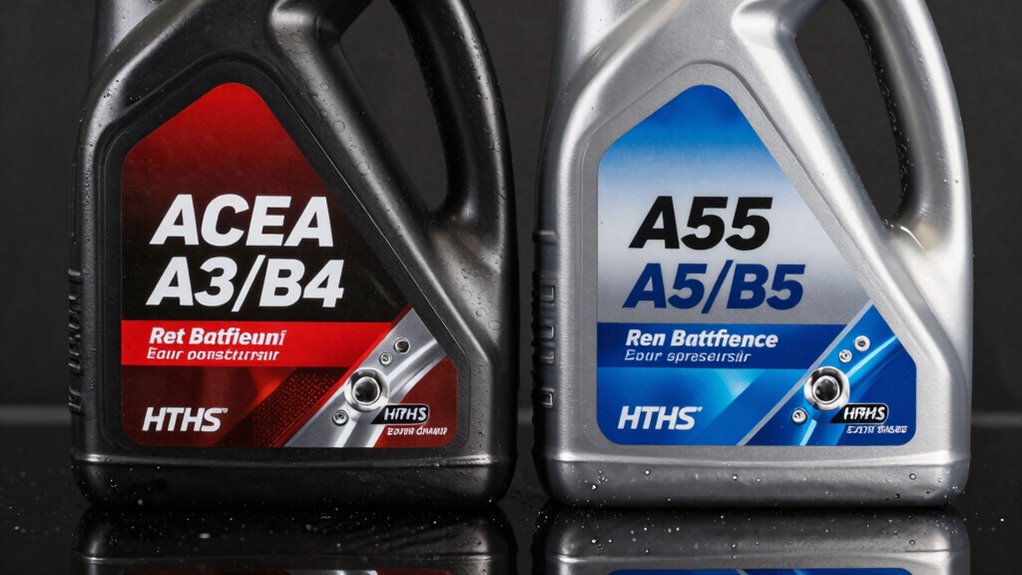

The main HTHS difference between ACEA A3/B4 and A5/B5 oils lies in viscosity at high temperatures. A3/B4 oils have higher HTHS ratings, meaning they are thicker and provide better engine film strength and protection under demanding conditions. A5/B5 oils have lower HTHS, making them thinner and improving fuel economy but offering less protection during heavy loads. Understanding this key difference can help you choose the right oil for your engine’s needs as you explore further.
Key Takeaways
- ACEA A3/B4 oils generally have higher HTHS values, providing thicker viscosity and stronger engine film protection.
- A5/B5 oils typically feature lower HTHS ratings, resulting in thinner oils that enhance fuel efficiency.
- Higher viscosity (A3/B4) oils excel in demanding conditions, offering better wear protection and deposit control.
- Lower viscosity (A5/B5) oils reduce internal friction, improving efficiency but may offer less protection under heavy loads.
- Choosing the correct ACEA standard and HTHS rating aligns with engine requirements, ensuring optimal protection and performance.
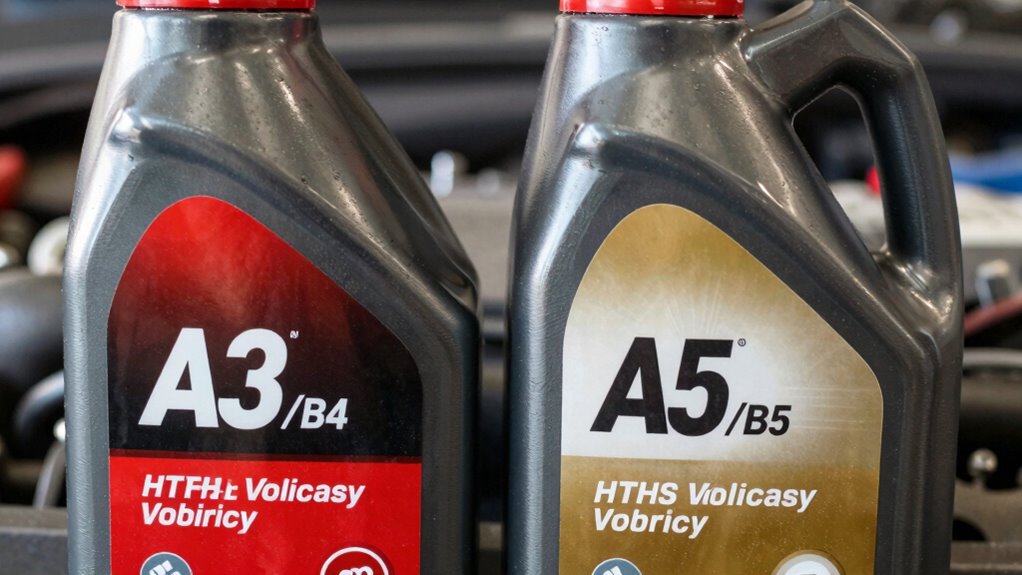
When choosing motor oil for your vehicle, understanding the differences between ACEA A3/B4 and A5/B5 specifications is vital. These standards guide you in selecting the right oil based on its oil viscosity and engine compatibility, which directly impact your engine’s performance and longevity. ACEA A3/B4 oils typically have higher HTHS (High Temperature High Shear) values, indicating a thicker viscosity at operating temperatures. This thicker oil provides superior film strength, making it ideal for high-performance engines, turbocharged units, or older engines that demand robust protection. Conversely, ACEA A5/B5 oils usually feature lower HTHS ratings, meaning they are thinner at operating temperatures, which can lead to reduced internal friction and improved fuel economy. However, their thinner nature might not always be suitable for engines that require more substantial lubrication under heavy loads or high temperatures.
Your engine’s compatibility plays a vital role here. If your vehicle’s manufacturer specifies a higher viscosity oil or recommends an ACEA A3/B4 oil, you’ll want to prioritize oils with a higher HTHS value to guarantee proper protection. These oils are designed to withstand extreme conditions, providing better wear protection and deposit control, especially in engines that operate under heavy stress. On the other hand, if your vehicle benefits from fuel efficiency and the manufacturer recommends ACEA A5/B5, then a lower viscosity oil with a reduced HTHS rating is appropriate. These oils help minimize internal engine friction, leading to improved mileage and lower emissions. But keep in mind, not all engines are compatible with lower-viscosity oils—using the wrong oil can compromise engine protection, especially during cold starts or under heavy loads.
The key difference lies in how these specifications balance oil viscosity and engine protection. While ACEA A3/B4 oils tend to be thicker and more durable in demanding conditions, ACEA A5/B5 oils focus on efficiency and emissions reduction, often at the expense of some protective qualities. Recognizing your engine’s needs and adhering to manufacturer recommendations guarantee you choose an oil that offers the right balance of oil viscosity and protection. Additionally, advancements in lubrication technology have allowed for better performance even with lower HTHS oils, providing options that do not sacrifice protection. Always consult your owner’s manual or a trusted mechanic if you’re unsure, because selecting the wrong specification can lead to increased wear, reduced engine lifespan, or even damage. Ultimately, understanding these nuances helps you make a more informed decision, ensuring your engine runs smoothly and efficiently for miles to come.

934330T Hydraulic Tank Desiccant Breather - Universal Fit for Parker Reservoirs, Moisture-Removing Dehumidification Filter (Stock in US)
934330T For Use With Parker All Hydraulic Reservoirs
As an affiliate, we earn on qualifying purchases.
Frequently Asked Questions
How Does HTHS Impact Engine Fuel Efficiency?
Higher HTHS viscosity improves engine performance by maintaining better oil film strength, which reduces metal-to-metal contact. This can lead to improved fuel economy because your engine runs more smoothly and efficiently. When the oil sustains ideal viscosity at operating temperatures, it minimizes friction and drag. As a result, your engine works less hard, saving fuel and enhancing overall performance. So, a better HTHS can positively impact your vehicle’s fuel efficiency and longevity.
Can I Switch Between ACEA A3/B4 and A5/B5 Oils?
You can switch between ACEA A3/B4 and A5/B5 oils only if they’re compatible with your engine and meet your manufacturer’s recommendations. Always check your vehicle’s manual and the oil specifications to confirm proper compatibility. Using incompatible oils might harm engine performance and longevity. Thus, it’s best to follow manufacturer guidance, compare oil properties, and select oils suited to your engine’s needs for maximum protection and efficiency.
Are There Specific Vehicle Types Best Suited for Each Oil?
You should choose your oil based on your vehicle’s compatibility and the oil selection criteria outlined in your owner’s manual. Some vehicles, especially older or high-performance models, perform better with ACEA A3/B4 oils, which offer higher HTHS for protection. Conversely, newer vehicles may benefit from ACEA A5/B5 oils for fuel efficiency. Always check your vehicle’s specifications before switching to guarantee ideal protection and performance.
How Does HTHS Influence Long-Term Engine Durability?
Higher HTHS oil strengthens your engine’s protection against wear, directly impacting long-term durability. It maintains a thicker oil film, reducing metal-to-metal contact and engine wear over time. This also enhances oil longevity, meaning your engine stays better protected longer, especially under heavy loads or high temperatures. Choosing an oil with the right HTHS value guarantees your engine runs smoothly for years, saving you from costly repairs and premature engine failure.
What Are the Environmental Implications of Each Oil Type?
Think of each oil type as a guardian of the environment. A5/B5 oils often promote better fuel efficiency, supporting emissions reduction, aligning with sustainability practices. Meanwhile, A3/B4 oils may produce slightly higher emissions but offer robust engine protection. Your choice impacts air quality and resource conservation. By selecting eco-friendly oils, you help reduce pollutants, contributing to a cleaner planet and sustainable future.

Des-Case DC-VG-1 Desiccant Breather (1)
Des-Case VentGuard Desiccant Series Breather
As an affiliate, we earn on qualifying purchases.
Conclusion
Understanding the difference between ACEA A3/B4 and A5/B5 is like choosing the right armor for your engine’s journey. A3/B4 offers robust protection for high-stress conditions, while A5/B5 shines in fuel efficiency and long-term performance. Picking the right one depends on your driving needs. Think of it as selecting the perfect shield—each suited for a different battle, ensuring your engine’s safety and longevity in the road ahead.
Des-Case DC-VG-BB Desiccant Breather (1)
Des-Case VentGuard Desiccant Series Breather
As an affiliate, we earn on qualifying purchases.

Air Sentry L-144 Desiccant Breather
L-Series Breathers
As an affiliate, we earn on qualifying purchases.