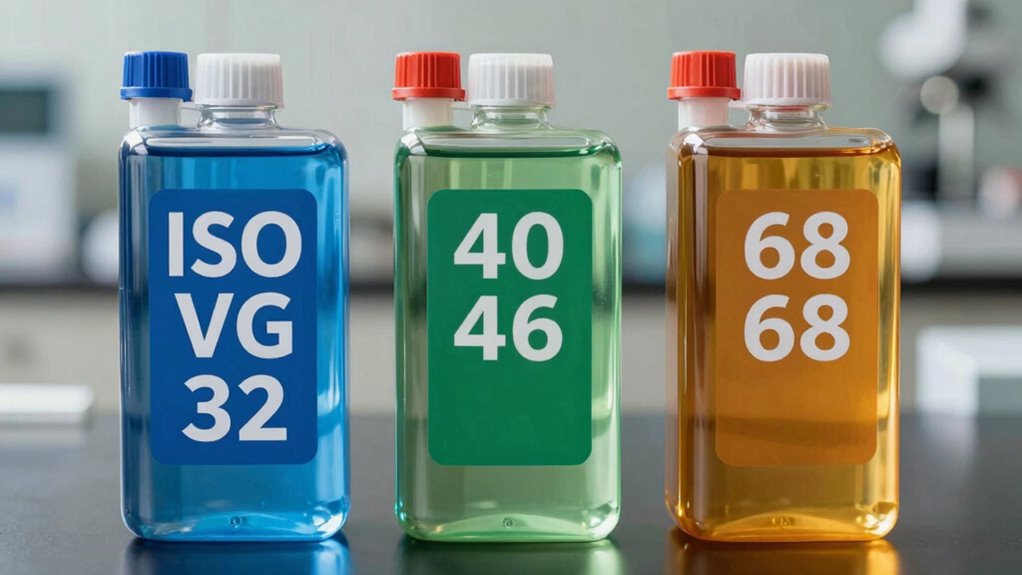
To pick the right ISO VG grade based on temperature, consider your operating environment. Use ISO VG 32 if you work in cold conditions, as it flows easily at low temperatures. For moderate temperatures, ISO VG 46 offers a balance of viscosity and stability. If you operate in high-temperature or heavy-duty situations, ISO VG 68 provides better film strength and thermal stability. Understanding these temperature-based differences helps optimize equipment performance — discover more ways to choose wisely just ahead.

Get business pricing on garage and car supplies
- Business-only prices and quantity discounts
- Tax-exempt purchasing
- Multiple users, one account, clear invoices
Key Takeaways
- Match the oil’s viscosity stability to your operating temperature range for optimal performance.
- Use ISO VG 32 in cold environments to ensure quick fluid flow but avoid hot conditions to prevent thinning.
- Choose ISO VG 46 for moderate temperatures, balancing flow and film strength across variable conditions.
- Opt for ISO VG 68 in high-temperature or high-load settings to maintain viscosity and prevent equipment wear.
- Consider temperature fluctuations: stable viscosity oils (VG 46 or 68) improve efficiency and equipment longevity.
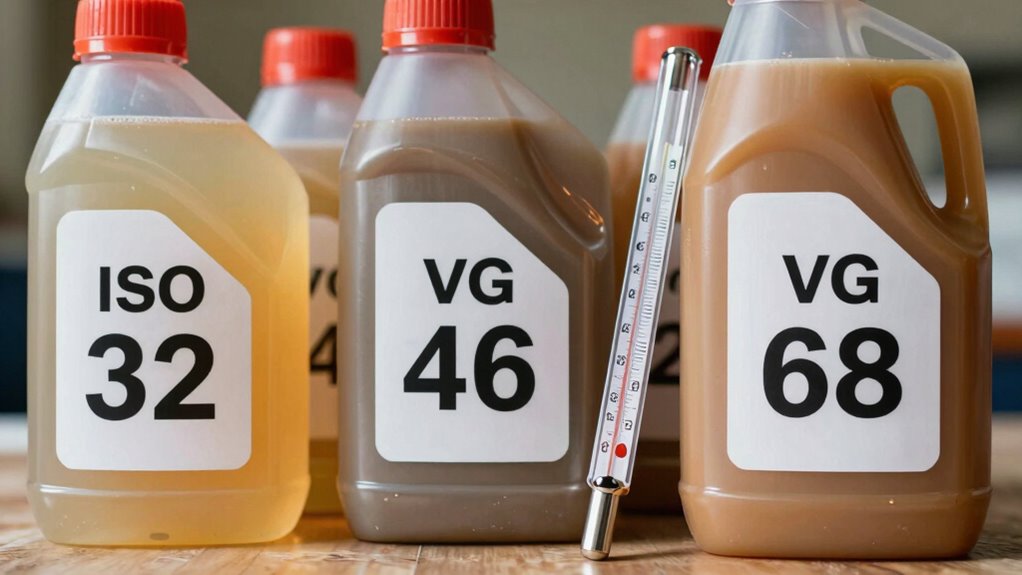
Are you unsure which hydraulic oil viscosity grade suits your equipment best? Choosing between ISO VG 32, 46, and 68 can seem tricky, but understanding how oil viscosity and temperature stability interact can guide your decision. Oil viscosity refers to the oil’s thickness, which influences how well it flows at different temperatures. When selecting the right grade, you need to account for how temperature fluctuations affect this viscosity and, consequently, your equipment’s performance. If the oil’s viscosity drops too much in high temperatures, or if it thickens excessively in cold conditions, your system’s efficiency and protection could suffer. Additionally, the viscosity index provides insight into how well the oil’s viscosity remains stable across temperature changes.
ISO VG 32 is a lighter oil designed for applications where low viscosity is advantageous. It flows easily at lower temperatures, making it suitable for equipment that operates in cold environments or where quick fluid movement is essential. However, because it’s thinner, it might not provide enough film strength at higher temperatures, leading to increased wear and potential damage. Its temperature stability is lower compared to higher viscosity oils, meaning it can thin out considerably in hot conditions, which may compromise lubrication. If your machinery runs in consistently cold climates, ISO VG 32 can be a good choice, but you should be cautious about its performance in warmer conditions.
ISO VG 46 offers a middle ground, balancing viscosity and temperature stability. It’s often used in general hydraulic applications where moderate temperature ranges are expected. This grade maintains better oil viscosity stability across a broader temperature spectrum, ensuring consistent lubrication. It’s suitable for equipment exposed to seasonal temperature changes or moderate heat levels, providing a reliable film thickness during operation. Its better temperature stability minimizes the risk of viscosity fluctuations that could lead to equipment wear or inefficiency. If you work in environments with variable temperatures but don’t experience extreme heat, ISO VG 46 is typically the ideal choice.
ISO VG 68 is a heavier oil designed for high-temperature or high-load conditions. It maintains oil viscosity even when temperatures rise, providing excellent temperature stability and film strength. This makes it suitable for heavy machinery or systems operating under intense heat or stress. Its thicker consistency ensures that even in hot conditions, the oil remains adequately viscous to protect components. However, in colder environments, this oil can become too thick, potentially causing sluggish operation or difficulty in startup. Thus, if your equipment frequently encounters high temperatures or heavy loads, ISO VG 68 can be the best option for ensuring consistent lubrication and minimal wear.
Ultimately, selecting the right viscosity grade depends on understanding your operating temperature range and how oil viscosity needs to adapt. By taking into account the temperature stability of each grade, you can improve your hydraulic system’s performance and longevity, ensuring efficient operation regardless of environmental conditions.
As an affiliate, we earn on qualifying purchases.
Frequently Asked Questions
How Does Ambient Temperature Affect Oil Viscosity Selection?
You should consider ambient temperature when selecting oil viscosity because it directly influences viscosity adjustment. In colder environments, choose a lower viscosity oil, like ISO VG 32, to ensure smooth operation and proper lubrication. Conversely, in warmer conditions, opt for higher viscosity oils like ISO VG 68 to maintain film strength. Adjusting viscosity based on ambient temperature helps prevent equipment wear and improves efficiency.
Can ISO VG Oils Be Mixed Without Affecting Performance?
Mixing ISO VG oils is generally safe if you consider lubricant compatibility, but it’s like blending different musical notes—sometimes harmonious, sometimes discordant. Oil mixing risks include reduced performance or unexpected wear. To avoid issues, stick to the same viscosity grade and brand when possible. Always check manufacturer guidelines, because even slight differences can impact your machinery’s health, and compatibility is key to maintaining ideal lubrication.
What Are the Long-Term Effects of Using the Wrong ISO VG?
Using the wrong ISO VG oil can lead to oil degradation over time, causing the oil to break down faster than expected. This results in poor viscosity stability, which can impair equipment performance and increase wear. Long-term, you might face increased maintenance costs, reduced efficiency, and potential equipment failure. To avoid these issues, always select the correct viscosity grade for your application, ensuring ideal protection and longevity.
How Does Equipment Type Influence Oil Viscosity Choice?
You should consider your equipment type because it directly impacts lubrication efficiency and equipment longevity. For high-speed machinery, a lower viscosity like ISO VG 32 guarantees smooth operation, while heavy-duty equipment benefits from higher viscosity oils like ISO VG 68 for better protection. Choosing the right viscosity based on your equipment’s design helps prevent wear, reduces downtime, and extends the lifespan of your machinery.
Are There Industry Standards Beyond ISO for Oil Viscosity?
You might think ISO standards are the only guide, but industry standards like ASTM and DIN also influence oil viscosity choices. These standards guarantee synthetic compatibility and help reduce environmental impact by setting performance benchmarks. Imagine oils designed not just for efficiency but also for eco-friendliness. Following these standards helps you select viscosities that meet global safety and sustainability goals, ensuring your equipment runs smoothly while protecting the planet.
As an affiliate, we earn on qualifying purchases.
Conclusion
Choosing the right ISO VG oil is like tuning a finely crafted instrument—you need the perfect balance. Whether you pick VG 32, 46, or 68, let the temperature guide your decision, like a compass pointing true north. By understanding their differences, you ensure your equipment runs smoothly, avoiding the chaos of misjudgment. So, listen to the heat, trust your instincts, and let the right oil keep your machinery humming like a well-oiled symphony.
As an affiliate, we earn on qualifying purchases.
temperature stable hydraulic oil
As an affiliate, we earn on qualifying purchases.
As an affiliate, we earn on qualifying purchases.
Fall Picks
fall essentials
As an affiliate, we earn on qualifying purchases.