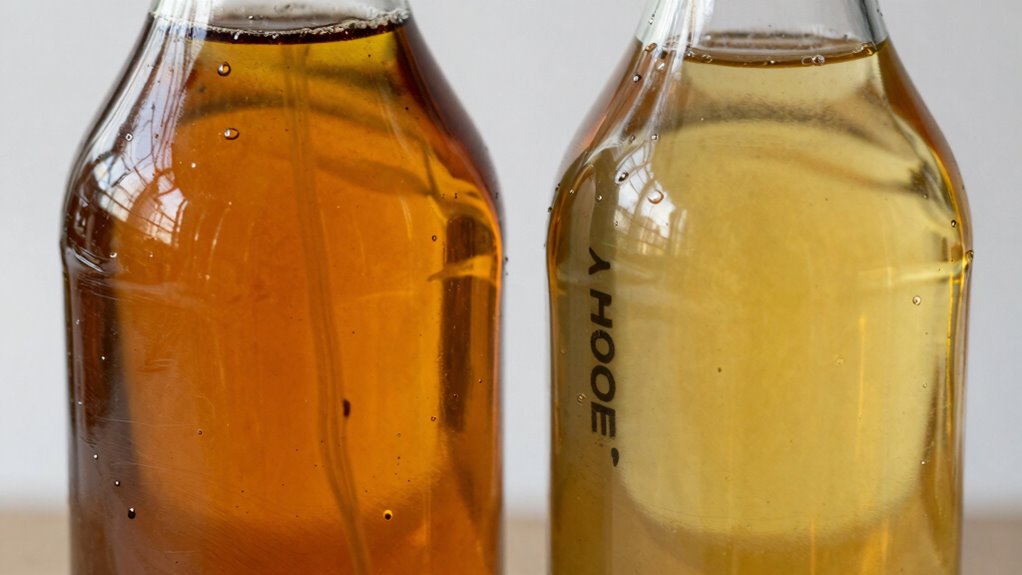

Two oils with the same viscosity grade can act very differently because of differences in their base oils and additive packages. High-quality synthetic oils often perform better under extreme temperatures and offer more protection than mineral-based ones, even if they share the same viscosity rating. Additives improve cleaning, wear protection, and stability, further impacting performance. If you want to understand what really makes these oils behave differently, keep exploring these key factors.
Key Takeaways
- Same viscosity grades don’t reflect differences in base oil quality or formulation.
- Variations in additive packages significantly influence deposit control and wear protection.
- Synthetic oils outperform mineral-based ones, despite identical viscosity ratings, especially at temperature extremes.
- Chemical composition and additive chemistry determine an oil’s thermal stability and engine protection capabilities.
- Certified standards ensure compatibility but don’t guarantee similar performance under all operating conditions.

Frantz Filter Universal Bypass Oil Filter Kit by Hot Shot's Secret
The Frantz Universal Oil Bypass Kit is a highly efficiency bypass filter; that can help increase engine life...
As an affiliate, we earn on qualifying purchases.
What Are Oil Grading Systems and Why Do They Matter?
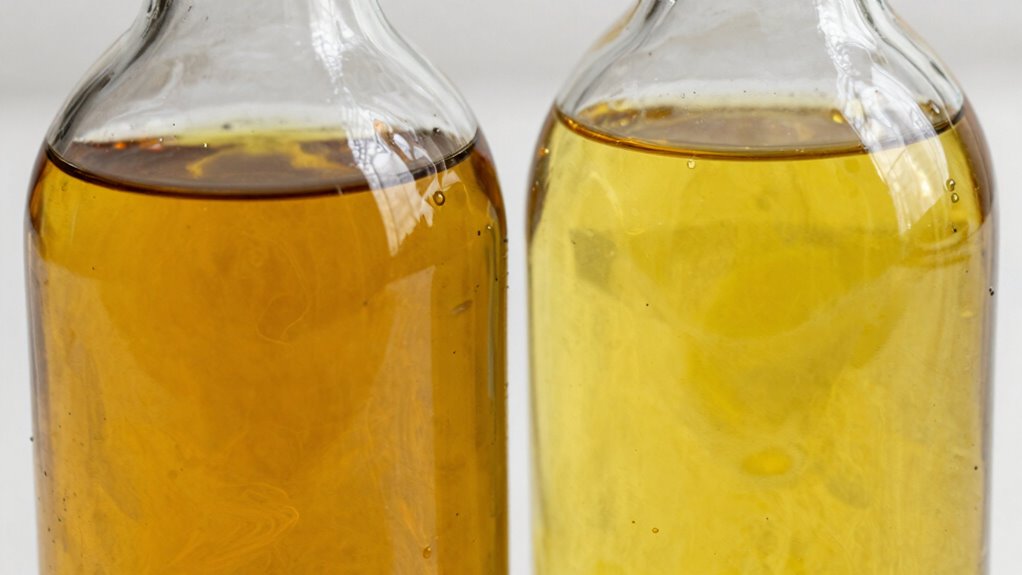
Have you ever wondered how engine oils are classified and why it matters? Oil grading systems, like API, ACEA, and SAE, help you understand an oil’s performance and suitability for your engine. API classifications, for example, label oils with letters such as S for gasoline engines or C for diesel engines, with newer grades offering better protection. The SAE system assigns viscosity grades like 5W-30, indicating flow characteristics at different temperatures. These standards are essential because they guarantee oils meet specific performance criteria, but they don’t tell the whole story. Two oils with the same grade might have different additive packages, base oils, or performance capabilities. Knowing these systems helps you choose the right oil for your engine’s needs and operating conditions. Understanding oil standards is key to making informed choices about your vehicle maintenance.

Frantz Bypass Filter Kit for 6.7 Liter Powerstroke Diesel Pickup Trucks by Hot Shot's Secret
6.7-liter Power Stroke bypass oil filter system increases engine life
As an affiliate, we earn on qualifying purchases.
Why Viscosity Ratings Alone Don’t Guarantee Oil Performance?

While viscosity ratings provide a quick way to identify an oil’s flow characteristics at specific temperatures, they don’t tell the whole story about how the oil will perform in your engine. Two oils with the same SAE grade can behave very differently due to variations in base oil quality and additive packages. These differences affect deposit control, wear protection, and thermal stability. For example:
| Aspect | Oil A | Oil B |
|---|---|---|
| Base Oil Type | Synthetic | Mineral-based |
| Additive Chemistry | Advanced anti-wear and detergents | Basic dispersants |
| Temperature Stability | High, maintains viscosity | Moderate, viscosity drops at high temps |
| Performance Focus | Fuel efficiency and protection | Cost-effective, basic protection |
Viscosity alone doesn’t guarantee ideal performance; other factors are essential.

Frantz Filter 5.9L & 6.7L Ram Diesel Truck Bypass Oil Filter Kit by Hot Shot's Secret
Increased Engine Life
As an affiliate, we earn on qualifying purchases.
How Additive Packages Enhance Engine Oil Effectiveness?
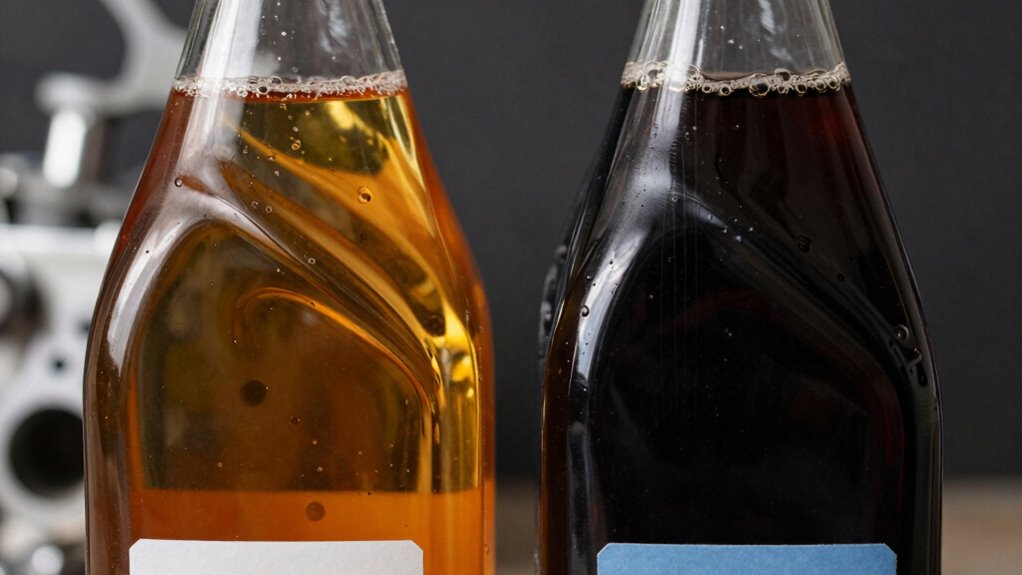
Additive packages are the key to revealing an engine oil’s full potential beyond its viscosity rating. They contain carefully formulated chemicals that improve performance, protect engine parts, and extend oil life. Detergents keep engines clean by preventing sludge buildup, while dispersants suspend dirt particles, stopping them from causing damage. Anti-wear agents form a protective film on metal surfaces, reducing friction and wear. Anti-oxidants slow oxidation, preventing oil degradation and sludge formation. Modern additive packages also include friction modifiers to boost fuel economy and seal conditioners to maintain optimal engine sealing. These additives work together to enhance protection under various conditions, ensuring your engine runs smoothly and efficiently. Understanding additive chemistry is crucial because it determines how effectively these components interact to protect and optimize engine performance. Without the right additive chemistry, even high-quality oils can’t perform at their full potential.

Frantz Bypass Filter Kit for 7.3 Liter Powerstroke Diesel Trucks by Hot Shot's Secret
7.3 liter Power Stroke bypass oil filter system increases engine life
As an affiliate, we earn on qualifying purchases.
How Base Oil Types Affect Behavior in Extreme Temperatures?

The type of base oil in your engine lubricant considerably influences how it performs under extreme temperatures. Synthetic oils, made from highly refined base stocks, resist oxidation and thermal breakdown better at high temperatures, maintaining viscosity and protective qualities. They also flow more easily in cold weather, ensuring quicker engine startup. Mineral-based oils, derived from crude oil, tend to thicken in cold conditions and break down faster in heat, which can reduce protection and increase engine wear. Re-refined oils fall somewhere in between, offering moderate temperature stability. The chemical structure of synthetic oils provides superior viscosity-temperature behavior, meaning they stay fluid in cold climates and resist thinning at high temperatures. This chemical stability is crucial for maintaining engine protection during temperature fluctuations. This difference in base oil types directly impacts your engine’s protection and performance when temperatures fluctuate dramatically.
How to Choose the Best Engine Oil for Your Vehicle’s Needs?

Choosing the right engine oil depends on understanding your vehicle’s specific requirements and driving conditions. To make an informed choice, consider these key factors:
- Check your owner’s manual for recommended viscosity and specifications.
- Identify your climate—choose low-temperature oils (like 0W or 5W) for cold regions and higher-viscosity oils for hot climates.
- Determine your driving style—frequent short trips may need oils with superior deposit control and additive packages.
- Assess your engine type—diesel vs. gasoline, turbocharged or naturally aspirated—each demands different API or ACEA standards.
- Understand the chemistry of additive packages, as they can influence how two oils of the same grade behave differently under various conditions and contribute to engine health.
Matching these factors ensures essential engine protection, fuel efficiency, and longevity. Don’t overlook certification standards and additive chemistry—they’re vital for choosing the best oil for your vehicle’s needs.
Frequently Asked Questions
Can Two Oils With Identical SAE Grades Have Different Longevity?
You can have two oils with the same SAE grades but different longevity because they often contain distinct additive packages and base oils. These differences influence how well the oil resists oxidation, breakdown, and sludge buildup over time. Higher-quality additives and synthetic bases generally extend oil life, while variations in formulation can cause one oil to last longer in your engine despite sharing the same viscosity grade.
How Do Additive Packages Impact Fuel Economy?
You might be surprised, but additive packages directly impact fuel economy. When manufacturers include friction modifiers and detergents, they reduce engine resistance and keep parts cleaner, improving efficiency. These additives work behind the scenes, making your engine run smoother and using less fuel. So, choosing an oil with advanced additive packages can lead to noticeable savings at the pump, even if the viscosity grades look the same.
Do Synthetic and Mineral Oils Perform Differently at High Temperatures?
Yes, synthetic and mineral oils perform differently at high temperatures. Synthetic oils generally resist thermal breakdown better due to their refined base stocks and advanced additive packages. This means they maintain ideal viscosity, provide better engine protection, and reduce sludge formation under extreme heat. Mineral oils may break down faster, leading to increased viscosity loss and reduced lubrication efficiency. So, choosing synthetic oil offers superior high-temperature stability and engine protection.
Are Higher API Service Grades Always Better for Engine Protection?
Higher API service grades aren’t always better for engine protection. While newer grades like SN offer improved features, the actual protection depends on your engine’s needs and the oil’s formulation. A premium grade with advanced additives may outperform a higher-rated oil in specific conditions. Always choose an oil that meets your engine’s specifications and driving habits, rather than just relying on the API service grade alone.
How Does Climate Influence the Choice of Oil Viscosity?
Climate is the boss when choosing oil viscosity, shaping how your engine runs like a tailored suit. In cold weather, you want lower W-rated oils, like 0W-20, to flow easily and prevent startup wear. In hot climates, higher viscosity oils, like 10W-40, stay thick enough to shield engine parts under intense heat. Picking the right viscosity guarantees your engine performs smoothly, no matter the weather forecast.
Conclusion
Choosing the right engine oil is like picking the perfect pair of shoes—you need the right fit for your journey. Even if two oils share the same grade, their performance can differ wildly because of additives and base oil types. By understanding these factors, you can make smarter choices and keep your engine running smoothly. Don’t just follow the label—know what’s inside, so your vehicle performs at its best, no matter the road ahead.