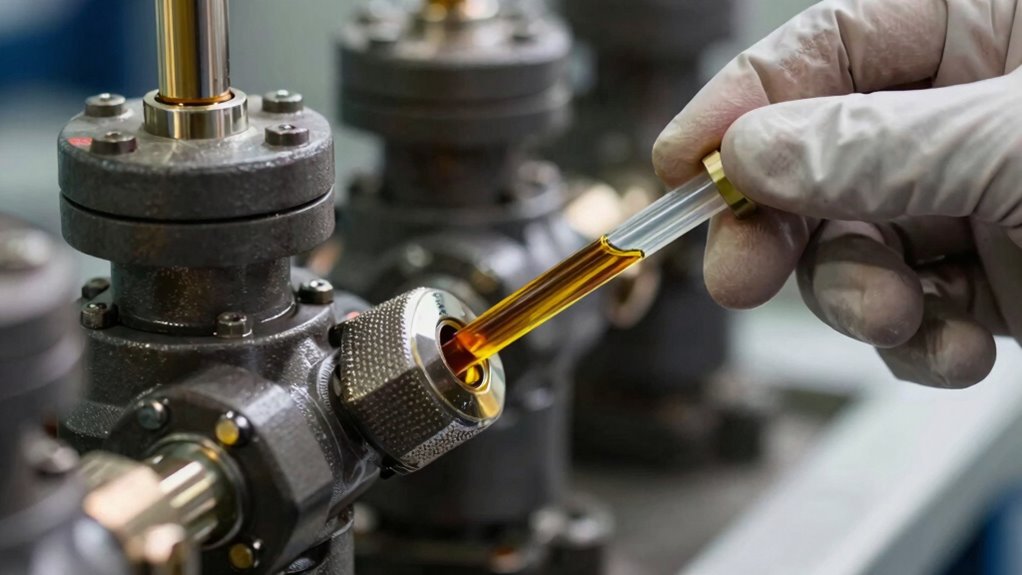
To get accurate hydraulic oil analysis results, always sample from the lowest point of the reservoir or dedicated sampling ports designed for testing. Avoid taking samples from the top, where oil can be stratified or contaminated by external debris. Use clean containers, wipe ports beforehand, and handle samples carefully to prevent introducing new contaminants. Following these best practices guarantees your data truly reflects the system’s condition—if you want to learn more, keep exploring these essential sampling tips.
Key Takeaways
- Sample from the lowest point of the reservoir or dedicated sampling port to obtain a representative oil sample.
- Avoid collecting from the top or near the surface where oil may be stratified or contaminated.
- Use clean, dedicated containers and handle with gloves to prevent introducing external contamination.
- Flush the sampling port with a small amount of oil before collecting the sample to clear debris.
- Ensure the sample volume is sufficient (around 100 mL) and label it clearly for accurate analysis.
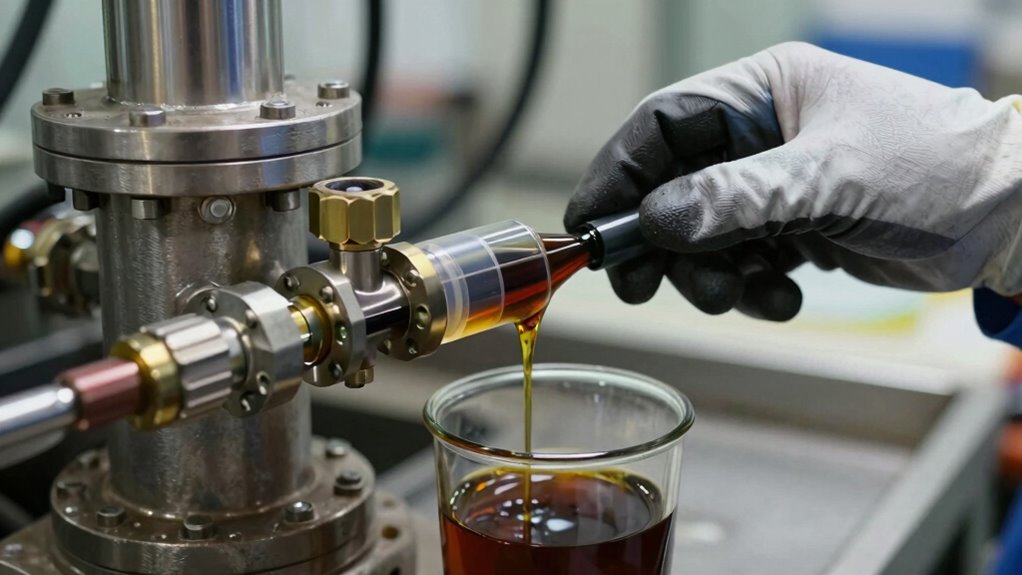
Have you ever wondered how to guarantee your hydraulic systems stay reliable and efficient? One of the most critical steps is proper oil sampling, and where you take those samples can make all the difference. To get meaningful data, you need to focus on contamination control and use effective sampling techniques. Contamination is one of the biggest enemies of hydraulic health, as dirt, water, and metal particles can accelerate wear and cause unexpected failures. That’s why controlling contamination during sampling is essential; it ensures that the sample truly reflects the system’s condition, rather than introducing external debris that skews results.
Proper oil sampling and contamination control are key to reliable, efficient hydraulic systems.
When it comes to contamination control, you want to safeguard the sampling process minimizes exposure to airborne particles and surface contaminants. Use clean, dedicated sampling containers with tight-fitting caps and always handle them with gloves. Before sampling, wipe the sampling port thoroughly with a lint-free cloth to remove dirt and oil residues. If possible, use a dedicated sampling valve or port designed specifically for sampling rather than opening the system’s main line, which can introduce contaminants. It’s also wise to flush the sampling port with a small amount of oil before collecting the sample; this clears away any residual dirt or old oil that might linger around the port.
Sampling techniques are just as vital as contamination control. You should always follow a consistent procedure, such as drawing the sample from the lowest point of the reservoir or from a designated sampling port that provides a representative flow. Avoid sampling from the top of the reservoir, where oil may be stratified or contaminated with debris that has settled. When collecting, draw the sample slowly to prevent turbulence, which can cause air bubbles or mixing that distort the results. Make sure the sample volume is sufficient — typically around 100 milliliters — to perform all necessary tests while ensuring the sample remains representative of the whole system. Additionally, understanding the impact of contamination on test results can help you interpret data more accurately.
Another tip is to sample at regular intervals, especially during different operating conditions, to identify trends and detect early signs of contamination or wear. Always label samples clearly with date, time, and system details, so you can track changes over time. Proper sampling, combined with diligent contamination control, allows you to analyze oil accurately, predict failures before they happen, and maintain system performance. Remember, the accuracy of your tests depends heavily on where and how you take those samples, so invest the effort to follow best practices. When you do, you’ll gain valuable insights that keep your hydraulic systems running smoothly and extend their lifespan.

Under My Hood Oil Analysis Kit – Oil Test Kit for Gasoline & Diesel Engines
- Aircraft Use Warning: Not for aircraft engine testing
- Monitor Equipment Health: Detects wear metals and contamination
- Universal Compatibility: Suitable for gasoline and diesel engines
As an affiliate, we earn on qualifying purchases.
As an affiliate, we earn on qualifying purchases.
Frequently Asked Questions
How Often Should Hydraulic Oil Be Sampled for Optimal Results?
You should perform sampling frequency based on your equipment’s usage and environment, typically every 250-500 hours of operation or quarterly. Regular sampling helps you monitor oil degradation and catch issues early. If your system operates under heavy loads or harsh conditions, increase sampling frequency. Consistent testing ensures you maintain ideal hydraulic system health, prevent failures, and extend oil life, leading to more reliable and efficient operations.
What Tools Are Best for Collecting Hydraulic Oil Samples?
Think of yourself as a modern-day oil explorer, armed with the right tools. Use clean sampling containers designed for hydraulic oil to prevent contamination. The best sample location is usually a drain port or a sampling valve on the hydraulic system. Make certain the container is filled without air bubbles and sealed tightly. This way, your sample accurately reflects the oil’s condition, helping you detect issues early.
Can Improper Sampling Affect Hydraulic System Performance?
Improper sampling can critically impact hydraulic system performance by introducing contamination, which hampers efficiency and causes wear. You should guarantee proper contamination control during sampling and use clean, sealed containers for sample storage to avoid any external pollutants. If you neglect these steps, the data becomes unreliable, leading to incorrect assessments and potential system failures. Always follow best practices for sampling to maintain system health and accurate diagnostics.
How Do Temperature Variations Impact Oil Sampling Accuracy?
Don’t let temperature variations throw you off; they can really skew your oil sampling accuracy. Maintaining temperature stability is essential because fluctuating temps can cause inconsistent readings. Always choose a sampling location that minimizes exposure to temperature swings, like near the hydraulic pump or fluid reservoir. When the temperature is stable, your samples truly reflect the oil’s condition, helping you make better maintenance decisions and avoid costly surprises down the line.
Are There Industry Standards for Hydraulic Oil Sampling Procedures?
Yes, industry standards guide hydraulic oil sampling procedures, including using proper sampling containers and accurate sample labeling. You should select a clean, approved container to prevent contamination, and clearly label each sample with date, time, equipment details, and technician info. Following these standards guarantees your samples are representative and your data reliable, helping you make informed maintenance decisions and extend equipment life.

5 Gallon 14 Gauge Steel Hydraulic Fluid Reservoir Tank with Inlet 1-1/2" FNPT and Outlet 3/4" FNPT, Integral Mounting Foot On Each End, Heavy-Duty Tank Size 15''x9''x8''
- Application Uses: Suitable for hydraulic equipment and log splitters
- Design Features: Inlet strainer and breather cap included
- Port Sizes: Inlet 1.5" FNPT, Outlet 0.75" FNPT
As an affiliate, we earn on qualifying purchases.
As an affiliate, we earn on qualifying purchases.
Conclusion
Remember, where you take your oil samples makes all the difference in getting accurate, meaningful data. If you don’t sample correctly, you’re just spinning your wheels and missing the bigger picture. Pay attention to the recommended sampling points and procedures, because sometimes, the smallest detail can make a world of difference. Keep your eye on the ball, and your hydraulic system will thank you with longer life and better performance. Don’t let good judgment fall by the wayside.
Under My Hood Oil Analysis Kit – Oil Test Kit for Gasoline & Diesel Engines
- Aircraft Use Warning: Not for aircraft engine testing
- Monitor Equipment Health: Detects wear metals and contamination
- Universal Compatibility: Suitable for gasoline and diesel engines
As an affiliate, we earn on qualifying purchases.
As an affiliate, we earn on qualifying purchases.
Under My Hood Oil Analysis Kit – Oil Test Kit for Gasoline & Diesel Engines
- Aircraft Use Warning: Not for aircraft engine testing
- Monitor Equipment Health: Detects wear metals and contamination
- Universal Compatibility: Suitable for gasoline and diesel engines
As an affiliate, we earn on qualifying purchases.
As an affiliate, we earn on qualifying purchases.